
Table of Contents
- What Makes a Hydrogen Water Bottle Worth Buying
- Key Specifications: Hydrogen Water Bottle Comparison
- How to Clean a Hydrogen Water Bottle
- How Long Does Hydrogen Water Last
- Hydrogen Water Bottle Safety and Daily Use
- Portable vs. Countertop: Which System Fits Your Life
- What to Verify Before You Buy
- Frequently Asked Questions
Last Updated: October 10, 2026
What Makes a Hydrogen Water Bottle Worth Buying
A hydrogen water bottle is a portable device that uses electrolysis technology to infuse drinking water with molecular hydrogen gas. The appeal is straightforward: convenience. You fill it with water, press a button, and within minutes you have hydrogen-enriched water ready to drink anywhere.

But here's what separates a worthwhile purchase from an expensive paperweight: not all bottles generate the same hydrogen concentration, not all last through regular use, and not all deliver what their marketing claims.
The real question isn't whether hydrogen water exists, it does. The real question is whether a specific bottle will reliably produce it, hold that hydrogen long enough for you to drink it, and survive your daily routine without failing after a few months.
Key Specifications: Hydrogen Water Bottle Comparison
When comparing hydrogen water bottles, three measurable factors separate solid performers from disappointments.
Hydrogen Concentration and Output
Hydrogen concentration is measured in parts per billion (PPB). Most quality hydrogen water bottles target 500-1,200 PPB, though some claim higher. The challenge: many manufacturers don't independently verify these numbers, so you're often taking their word for it.
What matters in practice is consistency. A bottle that produces 800 PPB reliably beats one that claims 1,500 PPB but hasn't been lab-tested. Look for any mention of third-party verification or testing methodology. If a manufacturer won't explain how they measure output, that's a red flag worth noting.
The H2 WATER ELITE SPORT™ from Hydrogen Living uses advanced PEM/SPE electrolysis technology to transform ordinary drinking water into fresh Molecular Hydrogen-rich water in just minutes.

Generation Time and Battery Life
Generation time is how long you wait between filling the bottle and drinking. Most portable hydrogen water bottles take 3-8 minutes. Faster isn't always better, slower generation sometimes means more thorough hydrogen saturation.
Battery life determines how many cycles you get per charge. The H2 WATER ELITE SPORT™ features a 4,500 mAh rechargeable battery with wireless charging capability, meaning you're not fumbling with cables.
| Feature | Impact on Daily Use |
|---|---|
| 3-5 minute generation | Fits morning routine, work breaks |
| 6-10 minute generation | Better saturation, requires planning |
| 4,000+ mAh battery | Full day of use without recharging |
| Wireless charging | Convenience, less cable wear |
Water Quality and Purity Requirements
The water you put in matters. Tap water with high mineral content can interfere with electrolysis efficiency. Filtered or distilled water produces better results and protects the electrodes from mineral buildup.
Many portable bottles work best with purified water. If you're using tap water, you'll need more frequent cleaning to prevent mineral deposits that reduce performance over time.
How to Clean a Hydrogen Water Bottle
Maintenance separates bottles that last from those that fail. Mineral buildup inside the electrodes degrades performance and eventually stops the bottle from generating hydrogen altogether.
For deeper cleaning, some bottles include a self-cleaning mode, the H2 WATER ELITE SPORT™ has an intelligent self-cleaning system that automates this process.
How Long Does Hydrogen Water Last
This is where most people get disappointed. Molecular hydrogen doesn't stay dissolved in water indefinitely. It begins to dissipate the moment generation stops.
In a sealed bottle at room temperature, hydrogen typically remains at useful concentrations for 2-4 hours. After that, you're drinking water that looks the same but has lost most of its hydrogen content. This is why timing matters: generate your hydrogen water shortly before you drink it, not hours ahead.
Temperature affects this timeline. Cold water holds hydrogen longer than warm water. If you refrigerate your hydrogen water bottle after generation, you extend the retention window to 6-8 hours. Heat accelerates dissipation, leaving a filled bottle in a hot car essentially wastes the generation cycle.
The practical takeaway: generate and drink within 2-4 hours for maximum benefit. This is why portable bottles make more sense than filling a batch in the morning and expecting it to work at dinner.
Hydrogen Water Bottle Safety and Daily Use
Electrical and Device Safety
Safety concerns around hydrogen water bottles are minimal if you're using a quality device. The hydrogen gas is produced inside the bottle and stays dissolved in water; you're not inhaling gas. The electrolysis process itself is contained.
What matters for safety is electrical integrity. Ensure your bottle has proper insulation and waterproofing around the charging port. The H2 WATER ELITE SPORT™ includes a durable protective silicone sleeve.
Don't submerge the charging contacts. Don't attempt to repair internal components yourself. Don't use the bottle if you notice cracks in the chamber or visible damage to the electrical components.
For most people, a hydrogen water bottle poses no more risk than any rechargeable device. The real question is reliability: will it still work in three months?
Understanding Health Claims and Research Limitations
Hydrogen water is marketed with claims ranging from antioxidant support to athletic recovery to general wellness. Before investing in a bottle, it's important to understand what the research actually shows and what remains unproven.
Current state of human research: The scientific literature on hydrogen water includes studies in humans, but the body of evidence has limitations. Results should be interpreted cautiously.
Studies have examined hydrogen water's potential effects on:
H2 WATER ELITE SPORT™ Portable Molecular Hydrogen Water Bottle →
- Muscle fatigue and recovery in athletes
- Markers of oxidative stress in blood samples
- Inflammatory markers in specific populations
- Cognitive function and mental fatigue
Some studies report statistically significant improvements in these measures; others report no effect. The variation in results reflects differences in study design, participant populations, hydrogen concentration used, and measurement methods, not necessarily conflicting evidence about hydrogen water itself.
What research does not show: No published human studies demonstrate that hydrogen water treats, prevents, or cures any disease. Claims that hydrogen water "treats" arthritis, diabetes, cancer, or other conditions are not supported by current evidence and should be disregarded.
Mechanistic plausibility: The theoretical basis for hydrogen water's effects centers on molecular hydrogen's potential to act as a selective antioxidant (pubmed.ncbi.nlm.nih.gov). This mechanism is plausible based on laboratory research, but plausibility is not the same as proven efficacy in humans.
Practical interpretation: If you're considering a hydrogen water bottle for general wellness or athletic recovery, understand that:
- Any benefits observed in research are typically modest and measured over weeks of consistent use, not immediate.
- Individual responses vary widely; some people report noticeable effects, others report none.
- Hydrogen water is not a substitute for established health practices (sleep, exercise, nutrition, hydration with regular water).
- The cost of a quality portable bottle ($298.00) or countertop system ($3,998.00) should be weighed against uncertain benefit.
- If you have a medical condition or take medications, consult your healthcare provider before making hydrogen water a regular practice.
Water Quality and Byproduct Safety
The safety of hydrogen water also depends on what happens during electrolysis. When electricity passes through water, it splits H₂O into hydrogen gas (H₂), oxygen gas (O₂), and sometimes trace byproducts depending on the water composition and electrode materials.
With purified or distilled water: Electrolysis produces primarily hydrogen and oxygen. Both gases escape or remain dissolved at safe levels. No harmful byproducts accumulate.
With tap water containing minerals or chlorine: Electrolysis can produce trace amounts of chlorine gas (if chlorine is present) or other oxidation byproducts. Quality bottles use SPE/PEM membrane technology specifically to separate these byproducts from the drinking chamber, preventing them from entering the water you consume. This is why PEM/SPE design matters for safety, not just output.
Electrode material: Bottles using stainless steel or platinum-coated electrodes are safer than those using lower-grade metals, which can corrode and leach trace metals into water. Always verify electrode material in product specifications.
For most people, a hydrogen water bottle poses no more risk than any rechargeable device, provided you use purified or filtered water, maintain the device regularly, and choose a bottle with proper membrane separation technology.
Portable vs. Countertop: Which System Fits Your Life
The choice between portable and countertop comes down to your actual use pattern, not marketing promises.
Portable bottles like the H2 WATER ELITE SPORT™ make sense if you're mobile: commuting, traveling, at the gym, or moving between locations. You generate hydrogen water on demand wherever you are. The tradeoff is smaller capacity (typically 400 mL) and longer generation time per cycle.
Countertop systems like the Hydrogen Living Molecular Hydrogen Water Generator suit people who primarily drink at home or in an office. These machines produce larger volumes, often with faster generation cycles. The Hydrogen Living system uses advanced PEM and SPE technology with a 3-stage RO filter. The investment is higher, $3,998 versus $298 for a portable bottle, but the cost per use drops significantly if you're a heavy daily user.
Ask yourself: Where do I actually drink water? If the answer is mostly at home or your desk, countertop wins. If you're constantly moving, portable wins. Many people use both: a portable bottle for travel and work, a countertop system for home.
What to Verify Before You Buy
Before committing to any hydrogen water bottle, verify three things that manufacturers often skip over.
First, ask for evidence of hydrogen output. Not marketing claims, actual testing data. How was the hydrogen concentration measured? Was it done by an independent lab or the manufacturer? A company willing to share specific testing methodology and results gives you confidence the numbers are real.
Second, understand the warranty and support structure. What happens if the bottle stops generating hydrogen after six months? Is there a replacement policy or just a limited warranty? At Hydrogen Living, we back our products with a 1-year limited warranty and direct support for maintenance questions.
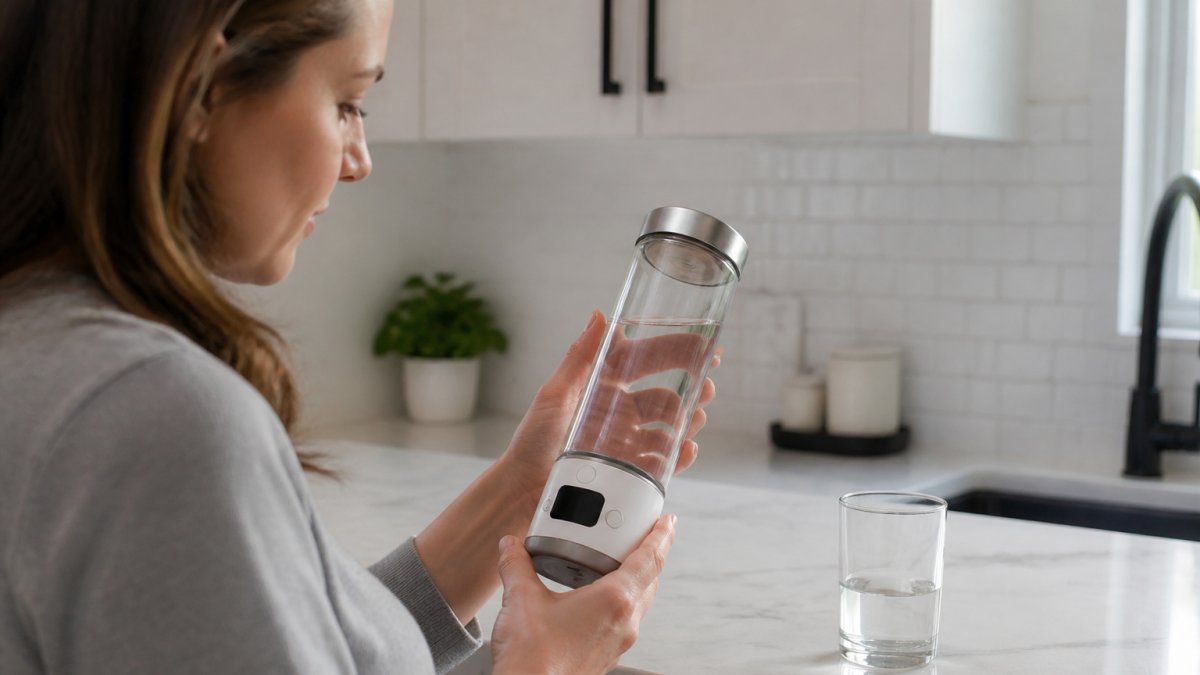
Third, test the actual user experience if possible. This is where location matters. Hydrogen Living offers a free consultation at our Bristol, Tennessee studio where you can see devices in person, ask questions directly, and understand how they fit your specific situation. If you're not local, request a detailed specification sheet and performance documentation before purchasing.
Many people spend money on hydrogen water bottles without understanding generation time, hydrogen retention, or maintenance requirements. That's how bottles end up unused in cabinets. A few minutes of verification upfront prevents that waste.
Choosing the right hydrogen water bottle means matching the device to your actual daily habits, verifying that it delivers what it claims, and committing to basic maintenance. Hydrogen Living's H2 WATER ELITE SPORT™ combines advanced PEM/SPE electrolysis technology with practical features like wireless charging, UV sanitation, and an intelligent self-cleaning system. Book a free consultation with our team to explore which system fits your lifestyle and wellness goals.
Frequently Asked Questions
What features should you compare when buying a hydrogen water bottle?
Focus on hydrogen concentration (measured in PPB or PPM), generation time, battery capacity, and water quality requirements. The H2 WATER ELITE SPORT™ produces fresh hydrogen-rich water in minutes with a 4,500 mAh battery and 400 mL capacity. Compare generation speed, charging method (USB vs. wireless), display type, and whether the bottle includes self-cleaning or UV sanitation. Higher concentration doesn't always mean better, consistency and your water's mineral content matter more.
How much hydrogen should a hydrogen water bottle produce?
Quality bottles typically produce 800-1,200 PPB (parts per billion) of dissolved hydrogen. The exact amount depends on your source water's mineral content and the device's electrolysis technology. Portable bottles using PEM/SPE membrane technology, like the Elite Sport™, are engineered to maximize output within the constraints of battery size. Ask manufacturers for lab-tested results rather than marketing claims alone, and verify they specify PPB or PPM measurements clearly.
How often should you clean a hydrogen water bottle?
Many modern bottles include self-cleaning cycles, use these as directed.
Are hydrogen water bottles safe to use every day?
Yes, when used as directed and maintained properly. Hydrogen water itself is safe, your body naturally produces small amounts of hydrogen gas. The safety concern is device maintenance: mineral buildup or contaminated water can reduce performance. Use filtered or distilled water, follow cleaning schedules, and ensure your bottle has UV sanitation or self-cleaning features. If you have specific health conditions, consult your doctor before daily use.