
Table of Contents
- Why Regular Cleaning Matters for Your Hydrogen Water Bottle
- What You'll Need Before You Start
- Step-by-Step: How to Clean Your Hydrogen Water Bottle
- Hydrogen Water Bottle Cleaning Solutions for Stubborn Buildup
- How to Remove Smell from Your Hydrogen Water Bottle
- Hydrogen Water Bottle Maintenance: Frequency and Safety
- Model-Specific Cleaning: Protecting Your Electrolysis Components
- Common Mistakes to Avoid When Cleaning
- Frequently Asked Questions
Last Updated: October 18, 2026
Why Regular Cleaning Matters for Your Hydrogen Water Bottle
A clean hydrogen water bottle is an investment in your daily hydration routine. Like any device that generates fresh water, it needs regular maintenance to work properly and stay safe to use.
Without proper cleaning, mineral deposits build up inside the bottle. Hard water leaves calcium and magnesium residue on the electrolysis components. Over time, this buildup reduces hydrogen generation efficiency. Your bottle stops producing the fresh hydrogen-rich water you're paying for.
Odors and unpleasant smells develop when residue sits inside. Bacteria can grow in damp areas if you don't dry the bottle completely between uses. Cleaning prevents these problems.
Regular maintenance also protects your electrolysis components. These sensitive parts generate the hydrogen gas. Mineral buildup damages them. Proper cleaning extends the life of your bottle by years.
Regular cleaning after each use keeps your device working at peak performance.
What You'll Need Before You Start
Gather these items before you begin cleaning:
- Mild dish soap (any brand works)
- Soft brush or soft sponge (never use abrasive tools)
- Distilled water (for rinsing)
- White vinegar or citric acid (for descaling)
- Baking soda (for odor removal)
- Soft cloth (for drying)
- Small bowl (for soaking)
- Warm water (not hot, check your bottle's manual for temperature limits)
Do not use harsh chemicals or abrasive scrubbing pads. These damage the bottle's interior coating and electrolysis components. Stick to gentle, food-safe cleaners only.
Check your specific model's manual before starting. Some hydrogen water bottles have special seals or components that need extra care. Hydrogen Living's H2 WATER ELITE SPORT™ includes an intelligent self-cleaning system, but manual cleaning between uses still matters for complete hygiene.

Step-by-Step: How to Clean Your Hydrogen Water Bottle
Step 1: Routine Rinsing After Each Use
Empty the bottle completely after drinking. Rinse the interior with warm water right away. Do not let water sit inside for hours.
Use your fingers or a soft brush to gently rinse all surfaces. Pay attention to the cap, lid, and spout. Water gets trapped in these areas.
Rinse thoroughly until all soap residue is gone. Mineral deposits start forming immediately if you skip this step. A quick rinse takes 30 seconds and prevents most buildup.
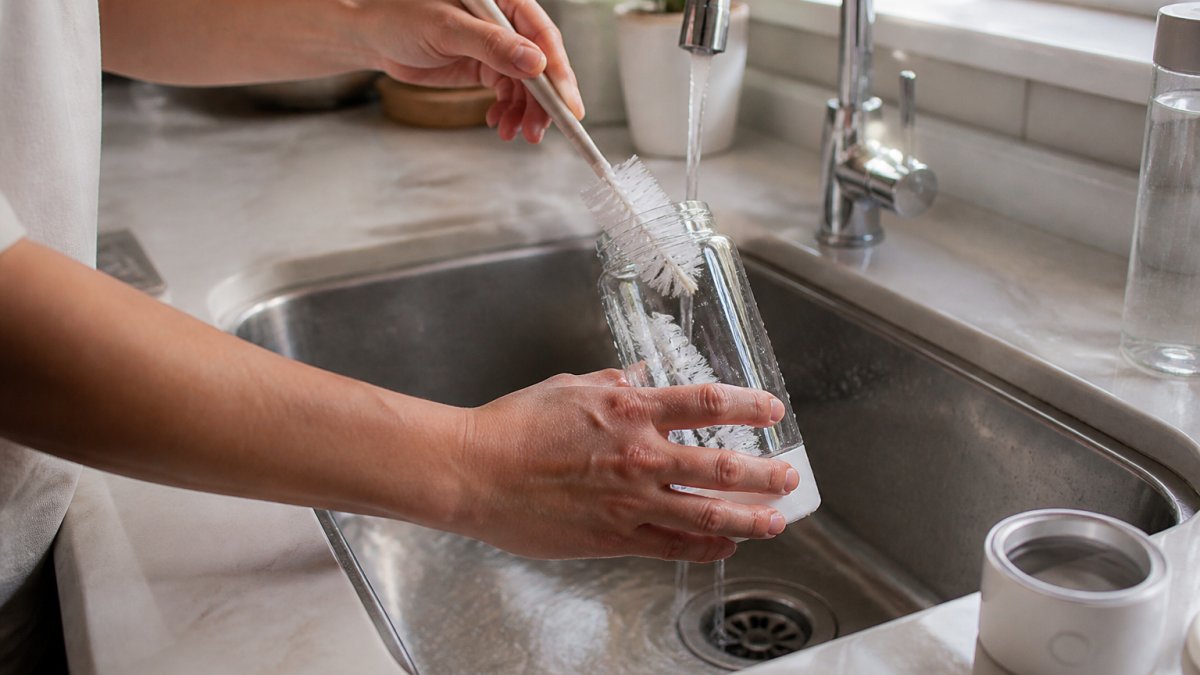
Step 2: Wash with Mild Dish Soap and a Soft Brush
Fill the bottle halfway with warm water and add one drop of mild dish soap. Use a soft brush or soft sponge to scrub the interior walls. Work from the bottom up to dislodge any particles.
Scrub gently. The interior coating is delicate. You don't need pressure, soap and a soft brush do the work.
Pay extra attention to corners and seams where small particles collect. Scrub the bottle interior for about one minute. Then rinse thoroughly with clean water until no soap remains.
Soap residue affects taste and can interfere with hydrogen generation. Rinse at least three times to be sure.
Step 3: Clean the Interior, Cap, Lid, and Spout
These parts trap water and mineral deposits. Remove the cap and lid if your model allows it. Check your manual first.
Soak the cap and lid in warm soapy water for five minutes. Use a soft brush to clean the threads and seals. Rinse completely.
Clean the spout or straw with a small brush. Mineral deposits block the opening. A dedicated straw brush works best for this narrow space.
For the bottle interior, use a soft sponge or cloth to wipe down all surfaces one more time. Make sure no soap or debris remains.
Step 4: Remove Mineral Deposits with Citric Acid or Vinegar
Mineral buildup is the most common problem. Hard water leaves calcium and magnesium deposits that slow hydrogen generation.
Fill the bottle halfway with distilled water. Add one tablespoon of citric acid or white vinegar. Let it soak for 30 minutes to one hour.
For stubborn mineral deposits, soak overnight. The acid dissolves mineral buildup safely without damaging the electrolysis components.
After soaking, use a soft brush to gently scrub the interior. The deposits should wipe away easily. Rinse thoroughly with distilled water at least five times.
Do not use hot water during descaling. Check your bottle's manual for safe temperature limits. Most hydrogen water bottles work best with warm water, not hot.
Step 5: Use Baking Soda for Odors and Residue
Baking soda removes unpleasant smells and absorbs residue. Fill the bottle halfway with warm water and add two tablespoons of baking soda (sodium bicarbonate).
Let it soak for 30 minutes. Swirl the bottle gently several times during soaking. The baking soda solution neutralizes odors.
Use a soft brush to scrub the interior gently. Baking soda is mildly abrasive but safe for the bottle's coating when used with a soft brush.
Rinse thoroughly with distilled water. Make sure all baking soda powder is gone before using the bottle again.
Step 6: Dry Completely and Check Seals
Moisture left inside causes odors and mineral deposits. After rinsing, stand the bottle upside down on a clean cloth to air dry.
Leave it open for at least two hours. Better yet, let it dry overnight. Complete drying prevents bacteria growth and mineral accumulation.
Before reassembling, check the rubber seals and gaskets. Look for cracks or hardening. If seals are damaged, contact Hydrogen Living for replacement parts. Damaged seals let water escape and reduce efficiency.
Wipe the bottle interior with a soft, dry cloth before reassembling the cap and lid.
Hydrogen Water Bottle Cleaning Solutions for Stubborn Buildup
Sometimes mineral deposits don't come off with vinegar alone. For heavy buildup, use a stronger approach.
Mix equal parts white vinegar and distilled water. Fill the bottle and let it soak for two to three hours. This stronger solution dissolves thick mineral crusts.
For very stubborn residue, use citric acid powder instead. One tablespoon of citric acid in half a bottle of water works better than vinegar for heavy deposits. Soak overnight if needed.
After soaking in either solution, scrub gently with a soft brush. Never use abrasive tools. The goal is to dissolve deposits, not scrape them off.
Rinse at least six times with distilled water. Vinegar and citric acid smell strong. Thorough rinsing removes the smell and any acid residue.
H2 WATER ELITE SPORT™ Portable Molecular Hydrogen Water Bottle →
| Cleaning Problem | Best Solution | Soak Time |
|---|---|---|
| Light mineral deposits | Vinegar and water | 30 minutes |
| Heavy mineral buildup | Citric acid solution | 2-3 hours or overnight |
| Unpleasant odor | Baking soda and water | 30 minutes |
| Cloudiness inside bottle | Vinegar soak followed by baking soda | 1 hour each |
How to Remove Smell from Your Hydrogen Water Bottle
Odors develop when water sits too long or when mineral deposits trap bacteria. Prevention is easier than removal.
Always empty and rinse your bottle immediately after use. Do not leave water sitting inside overnight.
If smell develops, baking soda is your best tool.
For stubborn odors, soak overnight. Baking soda absorbs the smell without harming the bottle or electrolysis components.
After soaking, scrub the interior lightly with a soft brush. Rinse thoroughly six times with distilled water.
Another option is white vinegar. The smell of vinegar is strong, but it kills odor-causing bacteria.
If odor returns quickly, the problem may be incomplete drying. Always leave the bottle open to air dry completely before reassembling.
Hydrogen Water Bottle Maintenance: Frequency and Safety
Daily cleaning keeps your hydrogen water bottle in top condition. Here's a practical maintenance schedule:
After every use:
- Empty the bottle completely
- Rinse the interior with warm water
- Rinse the cap, lid, and spout
- Leave open to air dry
Once per week:
- Full wash with mild dish soap and soft brush
- Clean all components thoroughly
- Check seals for damage
Once per month:
- Descale with vinegar or citric acid
- Soak for 30 minutes to one hour
- Use baking soda to freshen and remove odors
- Inspect the bottle for cracks or wear
Every three months:
- Deep clean with overnight soaking
- Check all rubber seals and gaskets
- Verify the bottle still generates hydrogen efficiently
- Contact Hydrogen Living if performance declines
Safety matters during cleaning. Never use hot water above the temperature your manual specifies. High heat can damage seals and electrolysis components.
Never submerge the charging port or electrical components in water. These areas should stay dry. Wipe them with a damp cloth only.
Always unplug the bottle before cleaning. Let it cool if you've just used it. Never clean while the bottle is charging.
Model-Specific Cleaning: Protecting Your Electrolysis Components
Different hydrogen water bottle models have different components. Check your manual before cleaning to avoid damage.
The H2 WATER ELITE SPORT™ from Hydrogen Living includes an intelligent self-cleaning system.
Do not submerge the touchscreen display or charging port. Wipe these areas with a damp cloth only.
The electrolysis membrane is the most delicate component. It generates hydrogen gas.
If mineral deposits coat the membrane, use gentle vinegar soaking instead.
Some models have removable water chambers. Check if yours does. Removable chambers are easier to clean thoroughly.
Always let components air dry completely before reassembling. Moisture trapped inside causes mineral buildup and odors.
If your bottle stops generating hydrogen after cleaning, the electrolysis components may need professional service.
Common Mistakes to Avoid When Cleaning
Using hot water: High temperatures damage seals and the electrolysis membrane. Warm water is sufficient.
Skipping routine rinsing: Many people only do deep cleaning monthly.
Using abrasive brushes or pads: Steel wool and rough sponges scratch the interior coating.
Leaving water sitting inside: Mineral deposits form fastest when water sits still.
Forgetting to dry completely: Moisture left inside causes odors and bacteria growth.
Mixing cleaning solutions: Never combine vinegar and baking soda in the bottle.
Ignoring the manual: Different models have different requirements. Your manual specifies safe cleaning methods for your bottle.
Not checking seals: Damaged seals reduce efficiency and let water escape. Inspect them monthly.
Keeping your hydrogen water bottle clean is simple when you follow a routine.
The H2 WATER ELITE SPORT™ from Hydrogen Living makes hydration convenient with its intelligent self-cleaning system and portable design. If you have questions about cleaning your specific model or want expert guidance on maintenance, Hydrogen Living offers free consultations to help you get the most from your device.
Frequently Asked Questions
How often should I clean a hydrogen water bottle?
Rinse your hydrogen water bottle after each use with warm water. Perform a thorough wash with mild dish soap weekly if you use it daily. Descale with citric acid or vinegar monthly to prevent mineral buildup. If you notice odors or cloudiness, clean immediately. Proper maintenance keeps your bottle functioning efficiently and ensures the electrolysis components remain clean.
Can I use vinegar to clean a hydrogen water bottle?
Yes, vinegar is effective for removing mineral deposits and descaling. Mix equal parts white vinegar and warm water, fill the bottle, and let it soak for 30 minutes. Rinse thoroughly afterward. Vinegar safely dissolves mineral scale without damaging internal components. For stubborn buildup, repeat the process or use citric acid as an alternative hydrogen water bottle cleaning solution.
How do I remove a smell from a hydrogen water bottle?
Fill the bottle with warm water and add 1-2 tablespoons of baking soda. Let it soak for 2-4 hours or overnight. Scrub gently with a soft brush, then rinse thoroughly. For persistent odors, soak in a vinegar solution for 30 minutes, then repeat the baking soda treatment. Always air dry completely before storing. Regular maintenance prevents odors from developing.
Can I put my hydrogen water bottle in the dishwasher?
No, do not use a dishwasher. The high heat and harsh cycles can damage the rechargeable battery, touchscreen display, and internal electrolysis components. Hand wash only with mild dish soap and warm water. For the cap, lid, and spout, you can remove them for gentle hand washing. Always air dry completely and never submerge the charging port or electronic components.